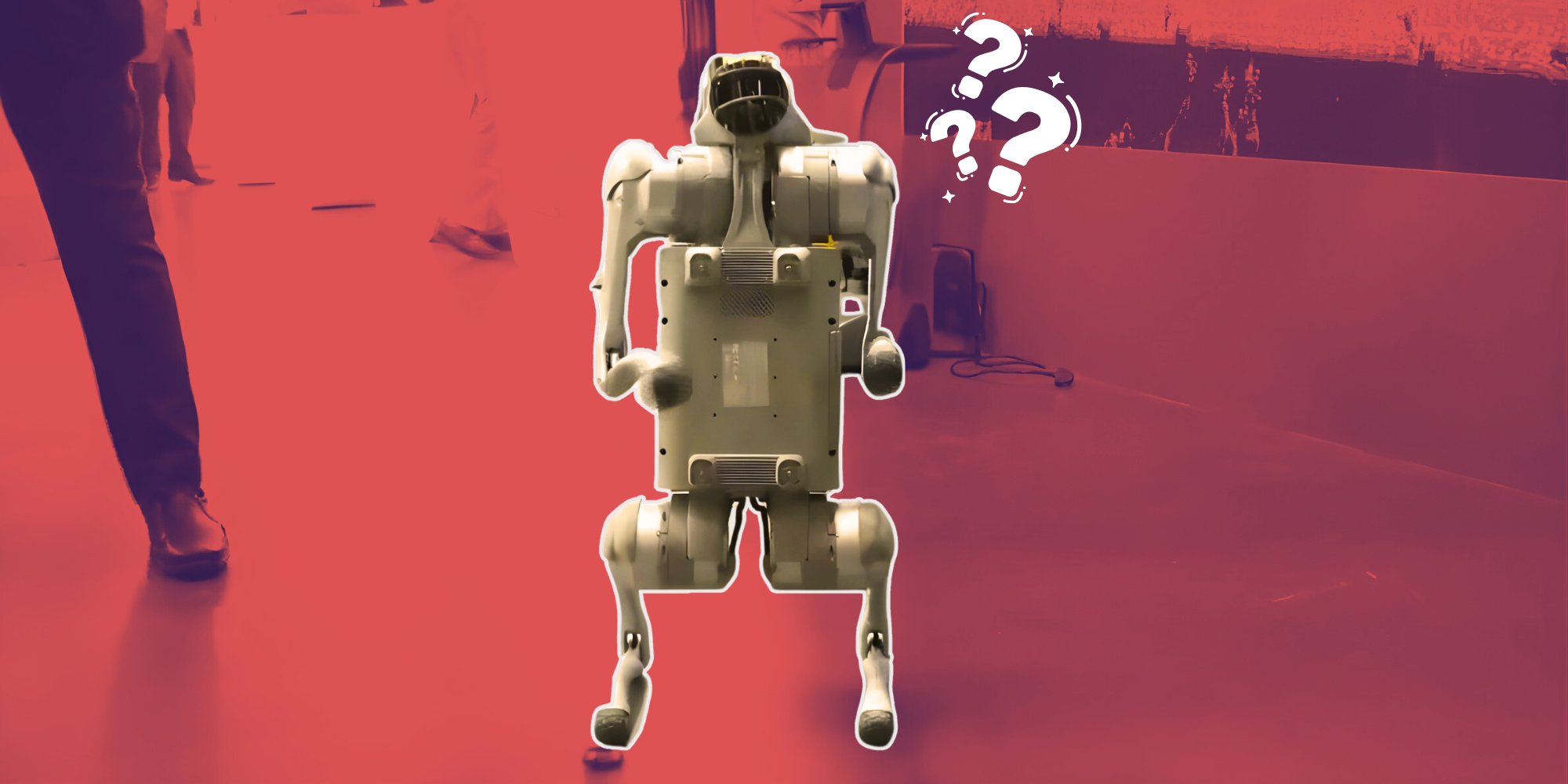
Galgotias University has been asked to vacate the Expo area at the ongoing India AI Impact Summit in New Delhi. The directive comes amid a fast-moving controversy around a robotic dog showcased at the university’s pavilion—an episode that has triggered online backlash and put the spotlight back on a familiar fault line in India’s innovation narrative: where demonstration ends and attribution begins.
The controversy that triggered the move
The flashpoint was a viral clip from the Summit floor in which a presenter is seen describing a robotic dog—introduced as “Orion”—in a way that many viewers interpreted as a claim of in-house development. Critics quickly alleged that the device was not built by the university, but rather resembled a commercially available model made by China-based Unitree Robotics.
As the clip spread, social media users and commentators accused the institution of rebranding an imported product as an Indian breakthrough, prompting a wave of posts questioning the credibility of the demo and the vetting at a flagship national technology event.
What was being said online
The backlash was fuelled by strongly worded posts that framed the episode as more than a demo miscommunication. One widely shared tweet alleged: “Galgotias University picked up a ready-made robot for ₹2.5 lakh, slapped their name on it, and presented it at the Delhi AI Summit as their ‘AI ecosystem’ worth ₹350 crore,” calling it “white-labeling, academic dishonesty, and fraud.”
Those claims remain allegations made on social media, but they shaped the public conversation by pushing the debate toward intent and accountability, not just product sourcing.
Galgotias’ clarification
In response to the backlash, Galgotias University issued a clarification stating it had not developed the robot dog and had not intended to portray it as an in-house creation—pushing back against claims that it was presenting imported hardware as original R&D.
However, the clarification did little to cool the debate, because the controversy is less about whether the hardware is imported (many expos display global products) and more about how the product was described on-camera—especially at a summit positioned around India’s AI capabilities and global standing.
Asked to vacate: what sources are saying
Following the uproar, sources told media outlets that the university was asked to leave the Expo area. Event organisers have not universally published a detailed public note explaining the action, and several accounts frame the decision as a response to reputational embarrassment caused by the “robodog” episode.
Why this matters for India’s AI showcase
Large national expos do more than display products—they signal credibility to investors, partners, students, and foreign delegations. When attribution is unclear, even a strong ecosystem story can get drowned out by a single viral moment. The episode also raises an uncomfortable but necessary question for event curators: what level of technical due diligence and messaging checks should be standard before a demo hits the spotlight?
For universities and incubators, the takeaway is equally direct: in an era where the internet can identify a product model in minutes, claims must be precise, verifiable, and documented—especially when the platform is national and the optics are global.
Author

prakhar@affmantra.com
Related Posts

Kunal Kapoor launches MetaGO, a doctor-led metabolic health platform
Actor and entrepreneur Kunal Kapoor has launched MetaGO, a doctor-led metabolic health platform, betting that India’s rising burden of obesity and related...
Read out all
Pronto extends series B to $45M at $200M valuation
- 0
- 686 words
Home services startup Pronto has raised an additional $20 million in an extension of its Series B round, taking the total financing...
Read out all
Swiggy, magicpin, Zomato see food delivery regain growth momentum in December qtr
- 0
- 317 words
India’s top three food delivery players, Swiggy, magicpin, and Zomato, regained growth momentum in the October-December period after a period of slower...
Read out all
Health, safety, AI: test your business creativity with Edition 222 of our weekly quiz!
- 0
- 760 words
Lateral Sparks, the weekly quiz from YourStory, tests your domain knowledge, business acumen, and lateral thinking skills (see the previous edition here)....
Read out all
PhonePe’s merchant network cross 47 million businesses ahead of IPO
- 0
- 423 words
As PhonePe prepares for its Initial Public Offering (IPO), disclosures in its updated Draft Red Herring Prospectus (DRHP) shed light on the...
Read out all
Inside Etah’s Bell Workshops: Ghungroos, Temple Bells, and More
- 0
- 375 words
In Etah, Uttar Pradesh, sound is shaped through metal. Temple bells that mark prayer time, ghungroos tied to a dancer’s ankles, school...
Read out all