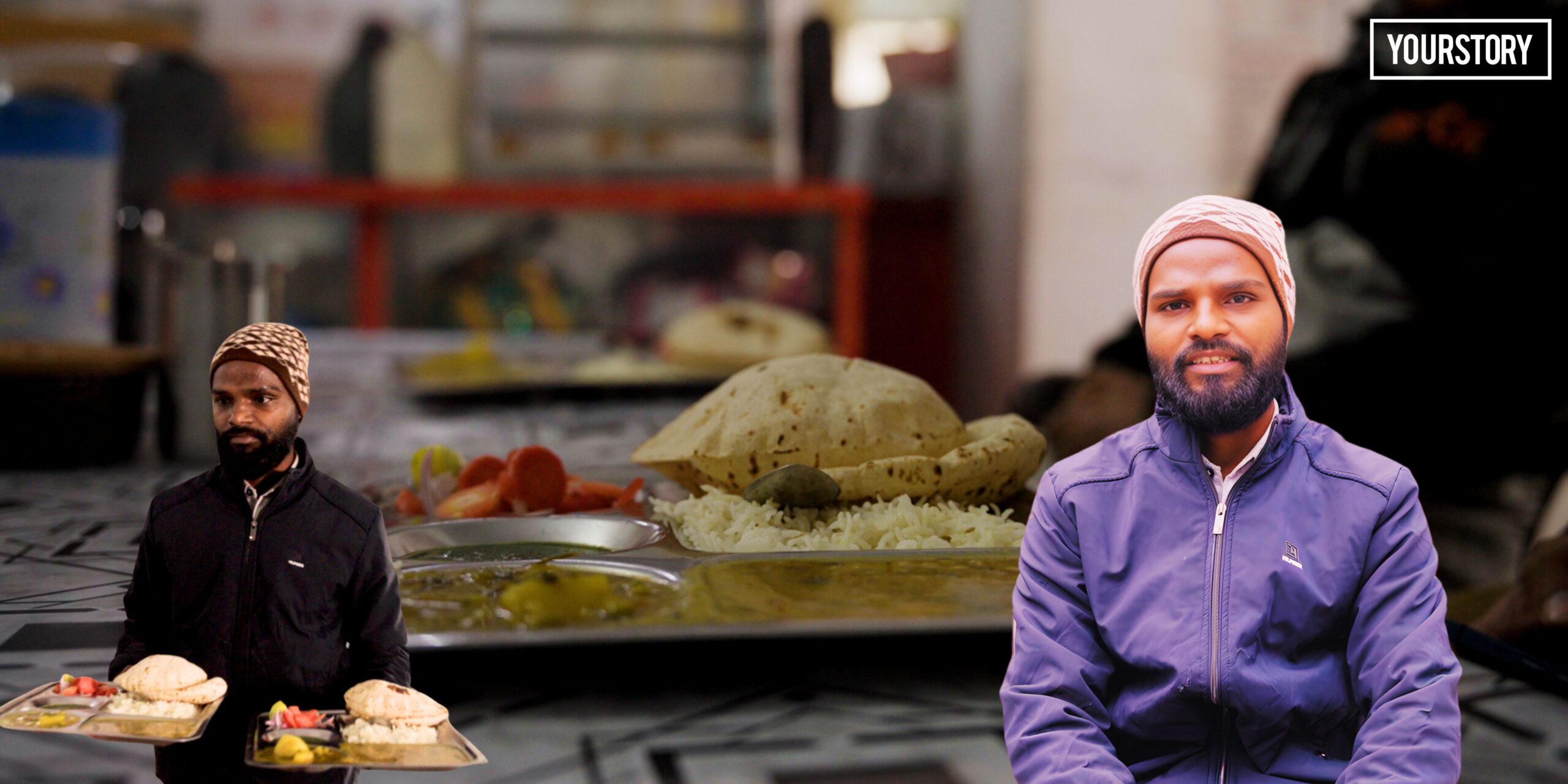
Sanjay Rathore, a resident of Sarai Meera in Kannauj district, Uttar Pradesh, has been running a canteen since 2013. The work is straightforward and constant: his family manages daily meals and refreshments inside a government building, serving officials, bank staff, and other visitors who pass through the premises.
He describes the canteen as an all-day operation with clear time blocks that shape how the kitchen runs. Breakfast starts early, with aloo parathas and tea served from around 8 a.m. until late morning. Lunch follows and continues through the afternoon. The hours between 3 p.m. and 7 p.m. are used for cleaning, washing utensils, and resetting the space, before dinner service begins in the evening and continues until about 9.30 p.m. It is a rhythm that leaves little room for downtime, and the family fills most roles themselves, supported by two or three workers for cleaning and basic kitchen tasks.
Rathore views his own role less as a cook and more as a manager who keeps the system moving. Each day begins with basic cleaning, preparing the counter, checking ingredients, and deciding quantities for dal, sabzi, rice and dough. By 8 a.m., he says, everything must be ready because the customers arrive on time.
Why the canteen started
He calls this the first and only business his family has run. Earlier, he says, their household depended largely on education and whatever stability his father’s work could provide. His father was a driver for many years, but the job eventually felt unsustainable. Age, fatigue and the strain of long hours pushed the family to consider a different path that could keep everyone together and financially involved.
When the opportunity for a canteen contract arose, Rathore’s father pursued it, secured the tender, and the family shifted into running the outlet full-time. Over time, the canteen became the centre of their working lives, tying income directly to how well they maintained regularity, hygiene and customer trust within a formal setting.
Rathore is clear about certain rules inside the premises. He does not allow smoking in the canteen and does not sell tobacco products. The location, he feels, demands a certain discipline, and he prefers to keep the space orderly, partly because the customers are largely from government offices and nearby institutions.
Upgrading the setup
As the canteen aged, the practical problems were less about demand and more about infrastructure. Furniture had become old, and the number of fridges and freezers felt insufficient. Rathore estimates he needed around Rs 3-4 lakh to replace equipment and add capacity, but private loans seemed difficult due to documentation requirements and interest burdens.
He learned about the Mukhyamantri Yuva Udyami Vikas Abhiyan (CM YUVA) Yojana through local industry office contacts, including a person he refers to as Sivanandan, who guided him through the process. The loan, routed through the bank, helped him plan upgrades, although he recalls that an accident occurred shortly before he was meant to collect the cheque, delaying his ability to go in person.
Even with the support, he remains conscious of repayment structures and timelines, especially around annual recovery expectations. Still, he says the assistance allowed the canteen to maintain its standards without taking on heavy interest pressure. “The biggest relief is not worrying about interest while the business is still finding its rhythm,” he says.
Rathore’s view of the future is measured. He speaks of effort and incremental improvement, not rapid expansion, and returns often to the daily work that keeps the canteen stable. In a business built on repetition and reliability, his family’s shift from a driver’s uncertain routine to a structured service outlet has brought a steadier footing, even if the work remains demanding every single day.
Author

prakhar@affmantra.com
Related Posts

Kunal Kapoor launches MetaGO, a doctor-led metabolic health platform
Actor and entrepreneur Kunal Kapoor has launched MetaGO, a doctor-led metabolic health platform, betting that India’s rising burden of obesity and related...
Read out all
Pronto extends series B to $45M at $200M valuation
- 0
- 686 words
Home services startup Pronto has raised an additional $20 million in an extension of its Series B round, taking the total financing...
Read out all
Swiggy, magicpin, Zomato see food delivery regain growth momentum in December qtr
- 0
- 317 words
India’s top three food delivery players, Swiggy, magicpin, and Zomato, regained growth momentum in the October-December period after a period of slower...
Read out all
Health, safety, AI: test your business creativity with Edition 222 of our weekly quiz!
- 0
- 760 words
Lateral Sparks, the weekly quiz from YourStory, tests your domain knowledge, business acumen, and lateral thinking skills (see the previous edition here)....
Read out all
PhonePe’s merchant network cross 47 million businesses ahead of IPO
- 0
- 423 words
As PhonePe prepares for its Initial Public Offering (IPO), disclosures in its updated Draft Red Herring Prospectus (DRHP) shed light on the...
Read out all
Inside Etah’s Bell Workshops: Ghungroos, Temple Bells, and More
- 0
- 375 words
In Etah, Uttar Pradesh, sound is shaped through metal. Temple bells that mark prayer time, ghungroos tied to a dancer’s ankles, school...
Read out all