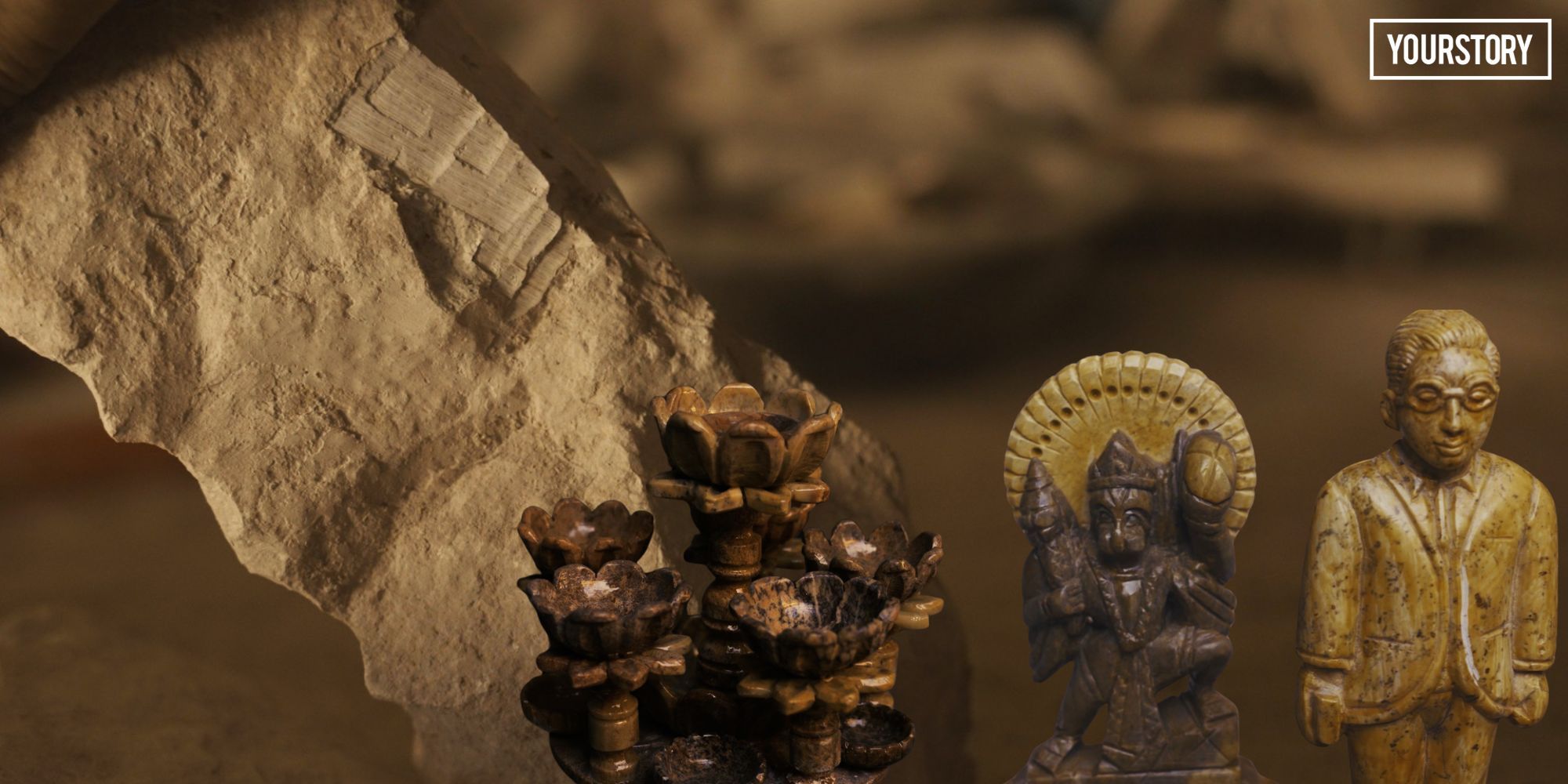
In the heart of Bundelkhand, in the historic district of Mahoba, UttarPradesh, a quiet yet remarkable craft tradition continues to shape identity, heritage, and livelihood. The Gaura stone of Mahoba, known for its softness and natural beauty, is transformed by skilled hands into objects of devotion, décor, and daily utility. What begins as a raw block of stone gradually becomes a piece of art that finds space in homes, temples, and meaningful gifting traditions across the country.
Gaura stone is not just a material; it is the foundation of a livelihood ecosystem. From the careful selection of stone to its cutting, carving, polishing, and eventual sale, each stage reflects patience and inherited skill. The craft supports families who have passed down techniques across generations, ensuring that the rhythm of chisel and hammer continues to echo in village workshops.
Recognised under the One District One Product initiative, Gaura stone carving has gained structured visibility. Through exhibitions, training programmes, and market outreach platforms, artisans have been able to present their work before wider audiences, connecting traditional craftsmanship with contemporary demand.
In Kohari village of Charkhari tehsil works Kalideen Vishwakarma, a dedicated Gaura stone artisan whose life story is closely tied to this craft. For him, stone carving is not simply an occupation—it is a family tradition that has shaped the identity of his household.
He recalls how earlier generations in his family worked with different materials, including wood and fine decorative carving. Over time, the locally available Gaura stone emerged as the primary medium of expression and livelihood. Its workable texture and natural patterns offered both creative scope and economic opportunity.
Today, the craft thrives within his home, with the next generation actively participating. Recognition from institutions has affirmed his skill, but for him, the real strength of the craft lies in practice—learning by doing, shaping stone through experience rather than instruction manuals.
What distinguishes Gaura stone is its inherent natural beauty. Unlike stones that require artificial colouring or heavy finishing, Gaura carries subtle earthy tones and organic patterns within its surface. Floral impressions and leaf-like textures appear as though nature itself etched designs before the artisan began carving.
Its softness allows remarkable detailing. Whether sculpting a deity, crafting a decorative mandir, or creating the intricate “elephant within an elephant” motif, artisans work with extraordinary precision. The final product retains the authenticity of the stone while reflecting the artisan’s imagination.
Over time, product diversity has expanded. Alongside religious idols and temple frames, artisans create figurines, planters, paperweights, bangle cases, and decorative items suited for modern interiors. The adaptability of Gaura stone ensures its relevance across both traditional and contemporary spaces.
The journey of a Gaura stone product begins with thoughtful selection. Artisans carefully inspect each stone block, ensuring it is suitable for carving and capable of holding fine detail. Once selected, the stone is cut into manageable pieces using saw machines and shaping tools.
Gradually, the artisan defines the form. The initial structure is carved out before moving into finer detailing. Chisels and grinders help bring motifs to life, while finishing touches refine the surface without obscuring the stone’s natural patterns. Each completed piece represents hours of concentration and years of cultivated skill.
Through exhibitions in cities such as Noida, Delhi, and Lucknow, Gaura stone artisans have displayed their creations before diverse audiences. These platforms have helped connect village workshops to broader markets, allowing the craft to travel far beyond Mahoba.
Gaura stone carving represents more than aesthetic appeal; it embodies continuity. In workshops where families work together, the craft becomes both economic support and cultural expression. Each sculpture and decorative object carries the imprint of tradition shaped for present-day appreciation.
In Mahoba, the soft texture of Gaura stone contrasts beautifully with the strength of the livelihoods it sustains. Through steady hands and enduring dedication, artisans continue to transform stone into stories—stories of heritage, skill, and quiet resilience.
Author

prakhar@affmantra.com
Related Posts

Kunal Kapoor launches MetaGO, a doctor-led metabolic health platform
Actor and entrepreneur Kunal Kapoor has launched MetaGO, a doctor-led metabolic health platform, betting that India’s rising burden of obesity and related...
Read out all
Pronto extends series B to $45M at $200M valuation
- 0
- 686 words
Home services startup Pronto has raised an additional $20 million in an extension of its Series B round, taking the total financing...
Read out all
Swiggy, magicpin, Zomato see food delivery regain growth momentum in December qtr
- 0
- 317 words
India’s top three food delivery players, Swiggy, magicpin, and Zomato, regained growth momentum in the October-December period after a period of slower...
Read out all
Health, safety, AI: test your business creativity with Edition 222 of our weekly quiz!
- 0
- 760 words
Lateral Sparks, the weekly quiz from YourStory, tests your domain knowledge, business acumen, and lateral thinking skills (see the previous edition here)....
Read out all
PhonePe’s merchant network cross 47 million businesses ahead of IPO
- 0
- 423 words
As PhonePe prepares for its Initial Public Offering (IPO), disclosures in its updated Draft Red Herring Prospectus (DRHP) shed light on the...
Read out all
Inside Etah’s Bell Workshops: Ghungroos, Temple Bells, and More
- 0
- 375 words
In Etah, Uttar Pradesh, sound is shaped through metal. Temple bells that mark prayer time, ghungroos tied to a dancer’s ankles, school...
Read out all