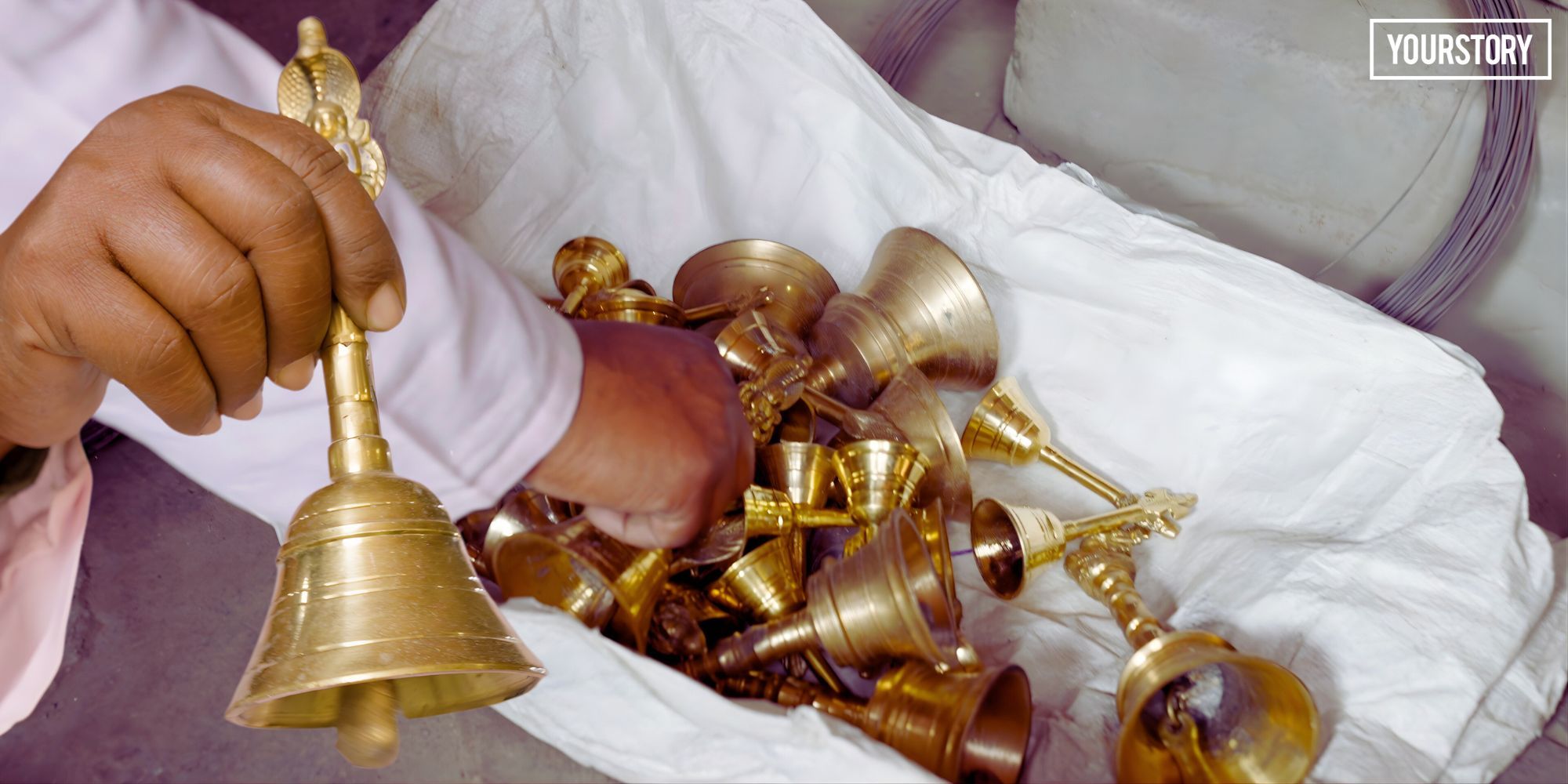
In Etah, Uttar Pradesh, sound is shaped through metal. Temple bells that mark prayer time, ghungroos tied to a dancer’s ankles, school bells that signal routine, and animal bells used in rural life all emerge from the workshops of Jalesar. What begins as brass and clay becomes an object defined as much by its resonance as by its form.
Jalesar’s bell-making tradition operates as a closely connected cluster rather than as isolated artisans. The work moves through many hands. One artisan prepares the clay core that forms the inner structure of the mould. Another presses and shapes the casting mould carefully so it can hold molten metal. At the furnace, a specialist melts brass in a crucible inside the bhatti, maintaining the right temperature before pouring the liquid metal into prepared moulds. Once the metal cools and hardens, the cast bell shifts to finishing units where excess material is removed and the surface is shaped.
Mohammad Naeev Ansari, a resident of Mohalla Qila, grew up within this rhythm of furnaces and moulds. The son of the late Abdul Qadeer, locally known as Munna Bhatti Wale, he formally entered the trade in 1998. For him, bell-making is not individual artistry but collective effort, where each stage depends on the precision of the previous one.
The cluster produces a wide range of products. Dance ghungroos, temple bells of varying sizes, school bells, animal bells, and decorative hanging pieces all move through local markets and exhibitions. Ansari believes that Jalesar’s local clay contributes to the tone and resonance that buyers recognize, particularly in religious settings where sound quality carries spiritual importance.
After casting, each bell undergoes cleaning and surface refinement. The final moment arrives when the internal striker is fixed inside. “When the striker goes in and the sound comes out, the heart feels happy,” Ansari says. The sound becomes both a technical test and an emotional confirmation that the work is complete.
Through ODOP-linked support, Ansari accessed a ₹5 lakh loan, which helped him strengthen production capacity. Participation in fairs such as Surajkund Mela, Delhi Haat, and the Kumbh Mela expanded buyer interaction and brought direct sales opportunities.
From clay preparation to sound testing, every hand matters in keeping Jalesar’s bells in circulation.
Author

prakhar@affmantra.com
Related Posts

Kunal Kapoor launches MetaGO, a doctor-led metabolic health platform
Actor and entrepreneur Kunal Kapoor has launched MetaGO, a doctor-led metabolic health platform, betting that India’s rising burden of obesity and related...
Read out all
Pronto extends series B to $45M at $200M valuation
- 0
- 686 words
Home services startup Pronto has raised an additional $20 million in an extension of its Series B round, taking the total financing...
Read out all
Swiggy, magicpin, Zomato see food delivery regain growth momentum in December qtr
- 0
- 317 words
India’s top three food delivery players, Swiggy, magicpin, and Zomato, regained growth momentum in the October-December period after a period of slower...
Read out all
Health, safety, AI: test your business creativity with Edition 222 of our weekly quiz!
- 0
- 760 words
Lateral Sparks, the weekly quiz from YourStory, tests your domain knowledge, business acumen, and lateral thinking skills (see the previous edition here)....
Read out all
PhonePe’s merchant network cross 47 million businesses ahead of IPO
- 0
- 423 words
As PhonePe prepares for its Initial Public Offering (IPO), disclosures in its updated Draft Red Herring Prospectus (DRHP) shed light on the...
Read out all
Hamirpur’s Metal Products: Crafting Everyday Tools for Farms and Homes
- 0
- 930 words
In Hamirpur district of Uttar Pradesh, metal products are recognised as one of the notified categories under the One District One Product...
Read out all