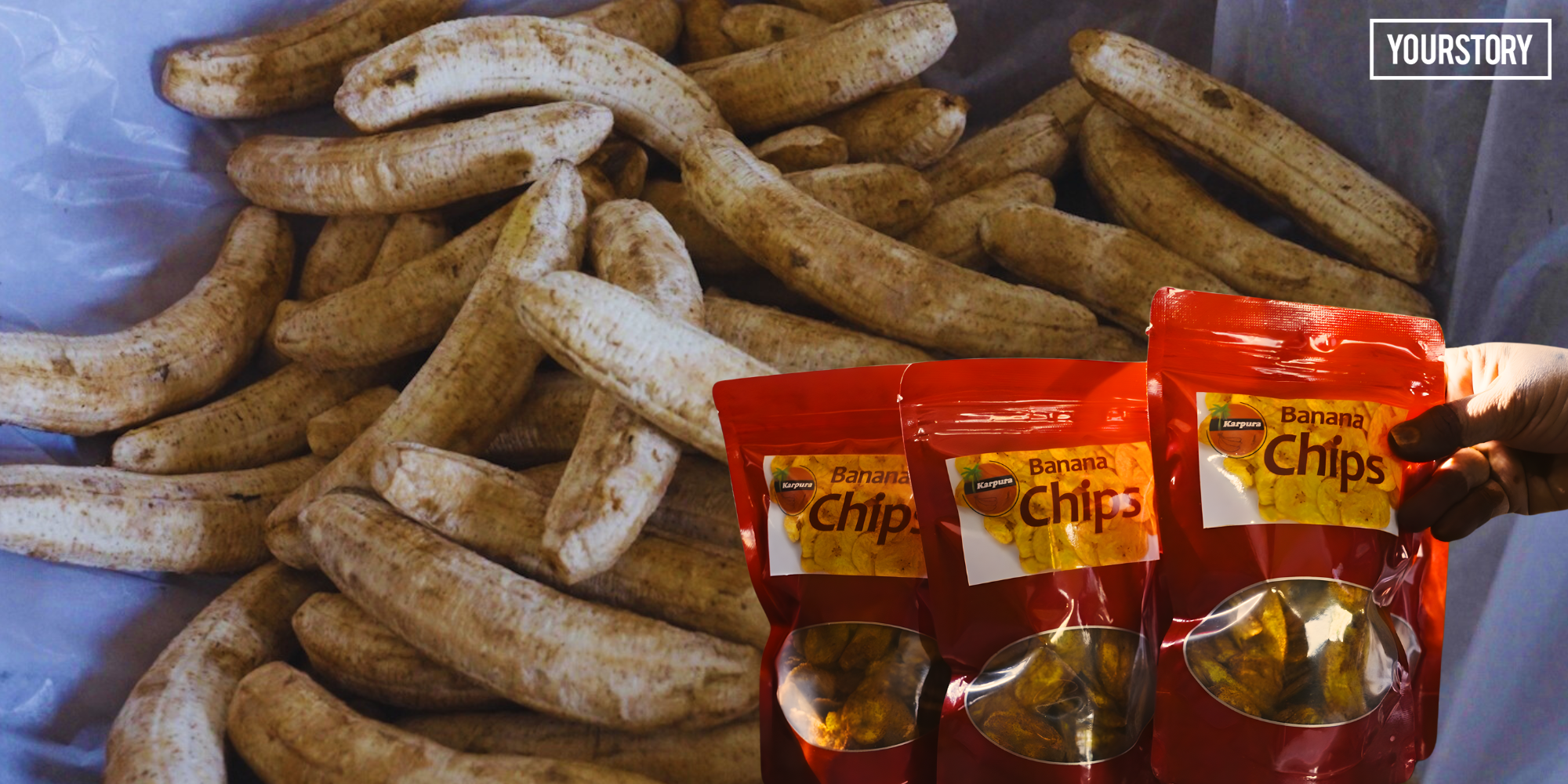
In Kushinagar, Uttar Pradesh, bananas are more than a fruit sold in markets or used in rituals. In a district known for large-scale banana cultivation, efforts are underway to extend value beyond harvest. From chips and processed foods to fibre and by-products from the peel, stalk, and flower, the banana plant is being viewed as a full-value resource.
This shift matters because price stability for farmers often ends at harvest. Local processing offers a way to absorb varied grades of produce and reduce post-harvest loss.
From Homemaker to Entrepreneur
Anita Rai, founder of Shri Maitli Enterprises and the brand Karpura, entered this space in 2019. Ms Rai saw potential beyond banana fibre, which had been the primary focus locally.
After visiting Tiruchirappalli to study banana-based food products, she returned with samples and ideas that helped demonstrate the commercial viability of processing. “Very little in a banana plant is waste,” she says. “If managed properly, each part can create income.”
Today, her unit produces 10–12 banana-based products, with chips serving as an accessible entry point into the market.
Processing and Training
The enterprise sources bananas locally and processes them into packaged foods while exploring value from peel, stalk, and flower. Cultural familiarity also shapes the strategy—banana leaves used as plates and the fruit’s role in rituals help reinforce demand.
Rai maintains a WhatsApp group connecting farmers and scientists, facilitating knowledge-sharing. She conducts annual training sessions for around 300 individuals and supports participants with basic toolkits to begin small-scale processing. Her unit employs six permanent staff and engages additional women during fairs and peak production cycles.
Through the One District One Product (ODOP) framework, access to training and institutional linkages has helped strengthen operations.
Value Beyond Harvest
For Rai, the key lies in perception. Storm-damaged plants or smaller fruit need not mean total loss. Fibre extraction, composting inputs, and food processing can each generate revenue when timely guidance and market access are available.
In Kushinagar, the banana story is gradually shifting—from a single fruit economy to a broader processing model where what remains in the field becomes the start of a new product line
Author

prakhar@affmantra.com
Related Posts

Kunal Kapoor launches MetaGO, a doctor-led metabolic health platform
Actor and entrepreneur Kunal Kapoor has launched MetaGO, a doctor-led metabolic health platform, betting that India’s rising burden of obesity and related...
Read out all
Pronto extends series B to $45M at $200M valuation
- 0
- 686 words
Home services startup Pronto has raised an additional $20 million in an extension of its Series B round, taking the total financing...
Read out all
Swiggy, magicpin, Zomato see food delivery regain growth momentum in December qtr
- 0
- 317 words
India’s top three food delivery players, Swiggy, magicpin, and Zomato, regained growth momentum in the October-December period after a period of slower...
Read out all
Health, safety, AI: test your business creativity with Edition 222 of our weekly quiz!
- 0
- 760 words
Lateral Sparks, the weekly quiz from YourStory, tests your domain knowledge, business acumen, and lateral thinking skills (see the previous edition here)....
Read out all
PhonePe’s merchant network cross 47 million businesses ahead of IPO
- 0
- 423 words
As PhonePe prepares for its Initial Public Offering (IPO), disclosures in its updated Draft Red Herring Prospectus (DRHP) shed light on the...
Read out all
Inside Etah’s Bell Workshops: Ghungroos, Temple Bells, and More
- 0
- 375 words
In Etah, Uttar Pradesh, sound is shaped through metal. Temple bells that mark prayer time, ghungroos tied to a dancer’s ankles, school...
Read out all